


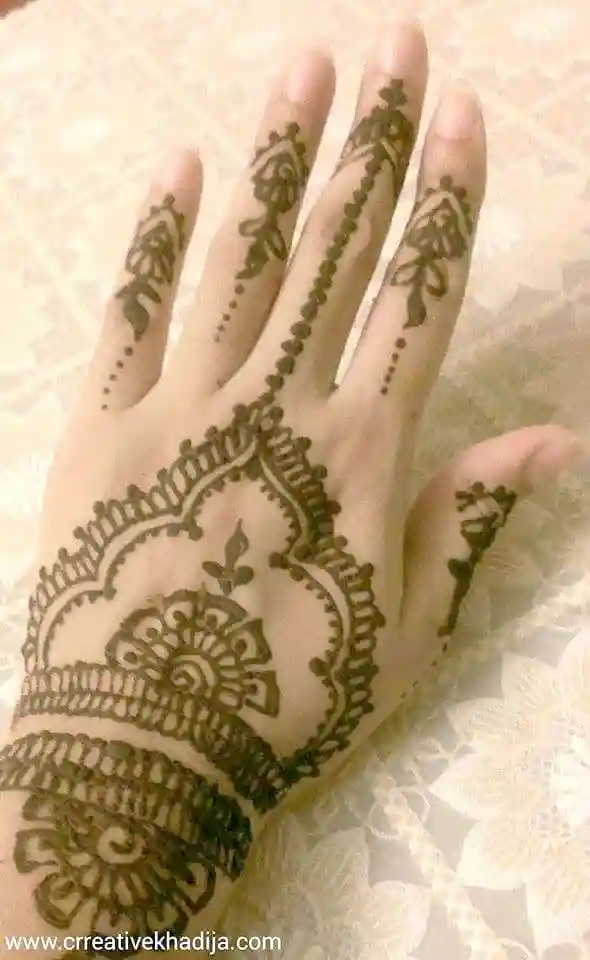
Morocco's Living Canvas of Henna Heritage


From wedding celebrations to contemporary interpretations, Moroccan henna offers inspiration that brings tradition and personal expression together.
Morocco sits at the crossroads of Africa, Europe, and the Arab world, and its henna traditions reflect this extraordinary convergence of cultures. While henna art is practiced across much of North Africa and the Middle East, Moroccan henna occupies a distinctive position in the global henna landscape—one defined by bold geometric patterns, ancient Berber symbolism, and an unbroken lineage of practice stretching back thousands of years.
For visitors to Marrakech's Djemaa el-Fna or the narrow streets of Fez's medina, the sight of hannaya (henna artists) at work is an indelible memory—women seated on low stools, squeezing thick henna paste from syringes in rapid, confident motions, adorning the hands of locals and travelers alike with diamonds, triangles, and interlocking geometric forms that seem almost mathematical in their precision.
But Moroccan henna is far more than a tourist attraction. It is a deeply embedded cultural practice with profound connections to Amazigh (Berber) identity, Islamic spirituality, folk medicine, and the rituals that mark life's most significant transitions. In this guide, we explore the rich world of Moroccan henna—its history, its symbols, its practitioners, and its enduring cultural significance.
Ancient Origins: Henna in North African History
The henna plant has grown wild and under cultivation across North Africa for millennia. Archaeological evidence from ancient Egypt confirms henna use for body decoration and mummification as early as 3500 BCE, and it is likely that the indigenous Berber peoples of the Maghreb—the ancestors of today's Amazigh communities—adopted henna practices in a similarly ancient period.
North Africa's position along ancient trade routes ensured that henna was both a local tradition and an export commodity. Henna powder from Morocco, Tunisia, and Egypt was traded across the Mediterranean and the Sahara, reaching sub-Saharan Africa, the Iberian Peninsula, and the Levant. Each region that adopted henna adapted it to its own aesthetic and cultural framework, but the Berber geometric tradition remained distinctive and self-contained, relatively uninfluenced by the curvilinear Arabic styles that developed to the east.
Pre-Islamic and Islamic Henna Traditions
Before the Arab conquest of North Africa in the seventh and eighth centuries, Berber henna traditions were likely intertwined with animistic and spiritual beliefs. Henna was believed to possess baraka—a concept of blessed spiritual power that predates Islam in North Africa but was later absorbed into the region's Islamic practice. The application of henna was thought to channel baraka onto the body, offering protection against malevolent spirits (djinn) and the evil eye.
With the Islamization of Morocco, henna traditions merged seamlessly with Islamic cultural practice. The Prophet Muhammad's favorable attitude toward henna reinforced its cultural standing, and henna became firmly associated with halal celebration, personal grooming, and spiritual preparation for important life events.
The Geometry of Berber Henna
The most visually striking aspect of traditional Moroccan henna is its geometric character. Unlike the flowing, curvilinear vines and botanical motifs of Arabic and Indian henna, Berber designs are built from fundamental geometric shapes—triangles, diamonds, straight lines, dots, squares, and zigzags—arranged in patterns of remarkable mathematical regularity.
This geometric vocabulary is not arbitrary. It is shared across virtually all Amazigh art forms—woven into carpets, carved into architectural woodwork, painted on pottery, tattooed on skin, and hammered into silver jewelry. The consistency of this visual language across media and across the vast geographic expanse of the Berber world (from Morocco to Libya, from the Mediterranean to the Sahara) suggests an artistic tradition of enormous antiquity and cultural significance.
Key Geometric Motifs and Their Meanings
Berber geometric motifs are not merely decorative—they carry symbolic meanings that have been transmitted through generations of women artists. While interpretations vary among tribes and regions, certain associations are widely recognized:
Diamond (lozenge): One of the most ubiquitous Berber motifs, the diamond represents the eye—specifically, a watchful eye that guards against evil. When elongated or combined in rows, diamonds may also represent seeds or grain, symbolizing fertility and agricultural abundance.
Triangle: Often interpreted as a protective symbol, particularly when pointing downward (representing femininity and the womb) or upward (representing masculinity). Two triangles joined at their points form an hourglass shape associated with the union of masculine and feminine energies.
Cross and plus sign: In Berber symbolism, the four-pointed cross represents the four cardinal directions, the four seasons, or the crossroads of life. It functions as a protective talisman, warding off evil from all directions.
Zigzag lines: Representing water—rivers, rain, or the life-giving flow of irrigation channels. In an arid land, water symbolism carries profound significance as an invocation of fertility and sustenance.
Dots: Seeds, stars, or blessings, depending on their arrangement. Clusters of dots may represent grain stores (prosperity) or the night sky (divine guidance).
Checkerboard patterns: Representing agricultural fields, community, and the ordered structure of social life.
Spiral: Eternity, continuity, and the cyclical nature of life. This motif appears across many ancient cultures and may have entered Berber art from shared prehistoric roots.
Tribal Variations in Geometric Style
Morocco's diverse Amazigh tribal groups—the Riffians of the north, the Zayane and Beni Mellal communities of the Middle Atlas, the Ait Ouaouzguite and Ait Bougmez of the High Atlas, and the desert communities of the Draa Valley—each maintain subtly different geometric vocabularies in their henna traditions. While the fundamental shapes are shared, the specific combinations, proportions, and arrangements function as visual markers of tribal identity.
A knowledgeable observer might identify a woman's regional origin from the henna patterns on her hands, just as the patterns in a Berber carpet can reveal its village of origin. This geographic specificity is one of the qualities that makes Moroccan henna so culturally rich and fascinating to study.
The Hannaya: Morocco's Henna Artists
In Morocco, the professional henna artist is known as a hannaya (sometimes spelled hennaya or naqasha). Historically, the hannaya was typically an older woman of respected social standing within her community—someone whose skill, experience, and wisdom qualified her to perform the henna rituals associated with weddings, births, and other milestones.
The hannaya's role extends beyond simple artistic application. She is a cultural custodian—a keeper of symbolic knowledge who understands not only the aesthetic aspects of her designs but also their protective and auspicious meanings. When a hannaya selects specific motifs for a bride, she is not merely decorating—she is encoding blessings, prayers, and protective symbols into the design based on her understanding of tradition and the specific needs of the occasion.
Training and Knowledge Transmission
Traditionally, the hannaya's skills were passed down within families, from mother to daughter or from experienced artist to apprentice. Young girls learned by observation, gradually graduating from preparing henna paste and holding the artist's supplies to practicing simple patterns and eventually taking on independent commissions.
This apprenticeship model ensured that both technical skills and cultural knowledge were transmitted together—a young hannaya learned not only how to draw a diamond pattern but also why it was placed on the center of the palm and what protection it was meant to offer.
In modern urban Morocco, the hannaya tradition continues to evolve. Many contemporary artists learn through formal courses, online tutorials, and cross-cultural exchange, and the repertoire of Moroccan henna has expanded to include Arabic floral elements and even Indian-inspired motifs alongside traditional Berber geometry. However, the deep geometric tradition remains the foundation of Moroccan henna identity.
Henna in Moroccan Wedding Rituals
The Moroccan wedding is a multi-day celebration in which henna plays a central and sacred role. The henna ceremony, typically held two to three days before the wedding proper, is one of the most important events in the entire celebration.
The Henna Night Ceremony
The Moroccan henna night follows a ritual structure that, while varying by region and family tradition, typically includes these elements:
Preparation of the henna: The henna paste is mixed by the hannaya or by a female relative of the bride, often with the addition of fragrant ingredients like rose water, orange blossom water, and essential oils. The mixing is itself a ceremonial act, sometimes accompanied by prayers and blessings.
The bride's entrance: The bride is brought into the ceremony space wearing a traditional green caftan, symbolizing paradise and new life. She is seated on a special cushioned throne or chair, surrounded by candles and flowers.
Application by the hannaya: The hannaya begins applying elaborate henna designs to the bride's hands and feet. This process can take several hours, during which guests sing, play music, and celebrate around the seated bride.
Guests' henna: While the bride's henna is being applied, additional artists may apply simpler designs to female guests, and small dabs of henna paste are offered to all attendees as a blessing—receiving henna from a bride's ceremony is considered particularly auspicious.
Candlelit procession: In many Moroccan traditions, the henna paste for the bride is carried in on a decorated tray (taifour) accompanied by a procession of women carrying candles and singing traditional songs. The candles symbolize the light of blessings entering the bride's life.
Symbolic Protections for the Bride
The henna applied to a Moroccan bride is not merely decorative—it is understood as a form of spiritual armor. The geometric designs are carefully chosen to protect the bride during the vulnerable transition period between her life as a single woman and her entry into married life. Specific motifs guard against the evil eye, attract fertility, ensure marital harmony, and invoke divine blessing upon the union.
In some traditions, a coin is placed in the bride's palm before the henna is applied, and the henna is layered over it—the coin is later recovered as a good-luck charm for the marriage. In other regions, the bride's mother-in-law is the first to place henna on the bride's palm, echoing the Pakistani tradition and symbolizing the new family's acceptance.
Henna Traditions of Fez and Marrakech
Morocco's two most famous cultural capitals—Fez and Marrakech—each have distinct henna traditions that reflect their unique histories and cultural compositions.
Fez: Scholarly Refinement
Fez, the intellectual and spiritual capital of Morocco and home to the world's oldest university (Al-Qarawiyyin, founded in 859 CE), has cultivated henna traditions that reflect its reputation for refinement and scholarly culture. Fezzi henna designs tend toward greater complexity and finer detail work than those of other regions, with intricate geometric lattices and carefully proportioned compositions that suggest the mathematical interests of the city's learned culture.
The hannayat (plural) of Fez are renowned for their precision and the elegance of their geometric constructions. Many Fez artists can be found in the narrow alleyways of the medina, working from small studios or making house calls for wedding ceremonies.
Marrakech: The Vibrant Crossroads
Marrakech, as a historic trading crossroads and gateway to the south, has a more diverse and eclectic henna tradition. The hannayat of Djemaa el-Fna have become internationally famous, attracting tourists who seek the iconic experience of receiving henna in the bustling square. While the quality of this tourist-oriented henna varies considerably, the best Marrakech artists are accomplished practitioners who maintain traditional Berber geometric methods while freely incorporating Arabic floral elements and contemporary innovations.
For visitors seeking authentic Moroccan henna in Marrakech, engaging a private hannaya recommended by a riad or hotel is often preferable to the open-air market experience, as it allows for a more relaxed, personalized session with higher-quality paste and greater attention to design selection. You can find more about different henna styles and traditions by visiting our styles page.
Moroccan Henna Compared to Middle Eastern Styles
Understanding how Moroccan henna relates to and differs from other regional traditions helps appreciate its unique character:
Geometry vs. botany: Moroccan henna is fundamentally geometric; Arabic (Gulf and Levantine) henna is fundamentally botanical. The distinction reflects deeper cultural-aesthetic differences between Berber and Arab artistic traditions.
Symbolic weight: Moroccan henna carries a heavier symbolic load—each motif has recognized meanings tied to protection, fertility, and fortune. Arabic mehndi, while culturally significant, is more focused on aesthetic beauty as its primary purpose.
Application technique: Traditional Moroccan henna artists often work with syringes rather than the hand-rolled cones preferred in Arabic and Indian traditions. The syringe allows for the crisp, straight lines that geometric designs demand.
Color goals: Both traditions aim for dark, rich stains, but Moroccan paste preparation may differ in its use of local ingredients—sugar, rose water, and specific Moroccan-sourced henna powders known for their high lawsone content.
Scope of application: Traditional Moroccan henna for everyday wear tends to be simpler and more contained than Arabic casual designs, focusing on the palms and fingertips rather than the back of the hand.
Contemporary Moroccan Henna: Preserving and Evolving Tradition
Like all living art forms, Moroccan henna continues to evolve. Contemporary Moroccan artists navigate between the pull of tradition—the geometric vocabulary that defines their cultural identity—and the influence of global henna trends circulating through social media and international henna communities.
Several positive developments are shaping the future of Moroccan henna:
Cultural documentation: Researchers and cultural organizations are increasingly working to document the specific geometric vocabularies of different Amazigh tribal groups before they are diluted by globalization.
Artist recognition: Individual hannayat are gaining recognition as named artists rather than anonymous craftswomen, allowing them to build reputations, teach internationally, and advocate for the cultural significance of their tradition.
Tourism as preservation: While mass tourism can dilute cultural practices, the global demand for Moroccan henna also creates economic incentives for maintaining traditional skills and knowledge.
Amazigh cultural revival: The broader Amazigh cultural renaissance in Morocco—the recognition of Tamazight as an official language, the celebration of Yennayer (Amazigh New Year), and the growing pride in Berber heritage—has reinvigorated interest in traditional henna as an important expression of Amazigh identity.
Moroccan henna is a tradition of extraordinary depth and beauty—a living link to one of humanity's most ancient body art practices. Whether encountered in the buzzing energy of a Marrakech souk, the quiet intimacy of a family wedding ceremony, or the pages of an ethnographic study, it offers profound insights into the intersection of art, culture, spirituality, and identity. Explore more henna traditions from around the world on our blog, or browse our gallery for Moroccan-inspired designs.
Advertisement


Advertisement


Advertisement


